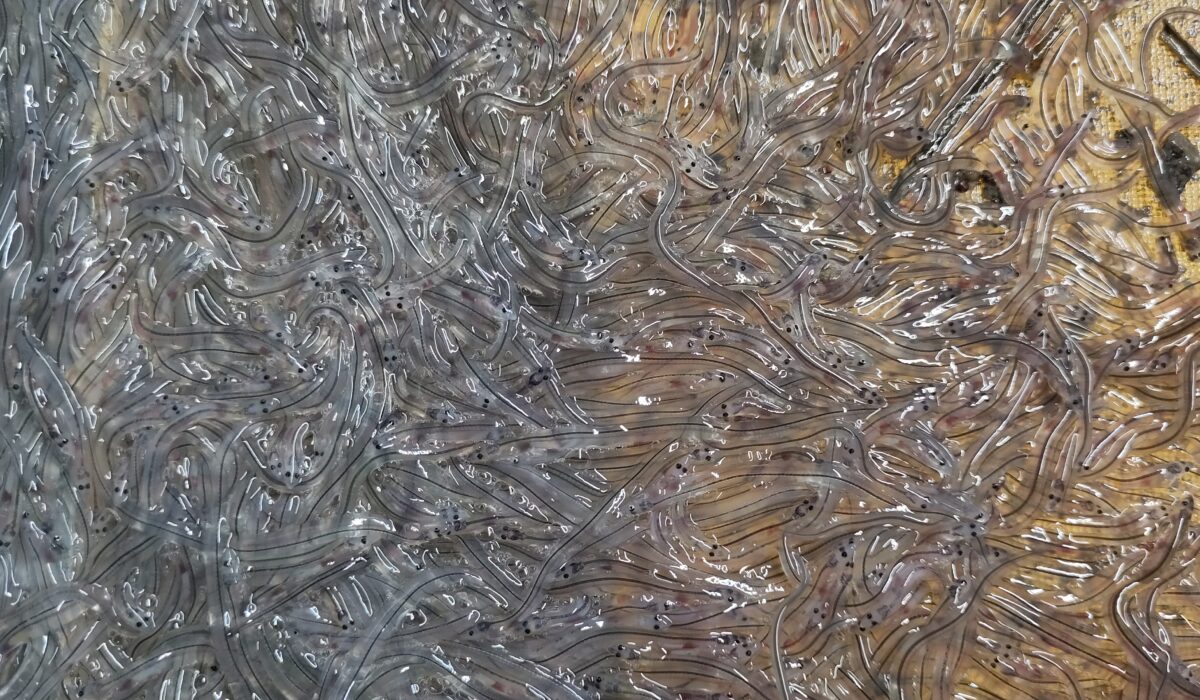
Glass eels in a tray. Photo credit: Alison Hutchinson
New Publication: Alison Hutchinson shares her new book chapter on European eels ‘Photovoice for Ecojustice: Following the European eel from the Sargasso Sea to the River Severn‘, published in the Global Green Crime and Ecojustice book edited by Daan van Uhm (a Beastly Business advisory board member) and Dina Siegel.
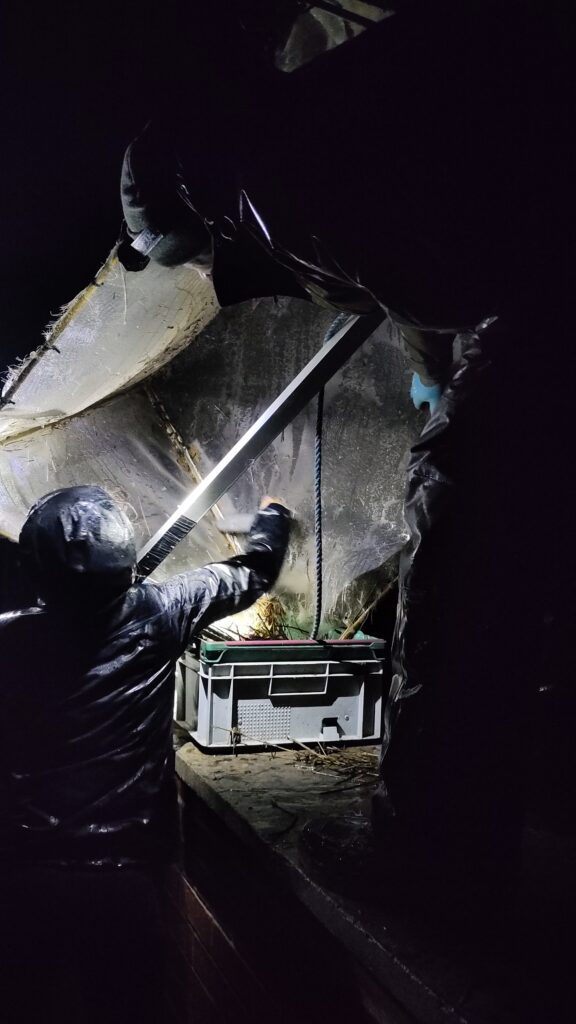
The chapter draws on her research tracing harms and crimes involving the European eel, following the species’ migratory route from the Sargasso Sea to the River Severn in the UK. The chapter weaves photo-voice narratives from interview participants to shine a light on the conflicts and harms facing the species and the social, ecological, and political dynamics that shape responses to, and understandings of, crime and harm.
Abstract: This chapter adopts a visual green criminological lens to examine how harms toward the critically endangered European eel (Anguilla anguilla) are conceptualised and responded to. Drawing on photovoice interviews with commercial and recreational fishers, conservationists, government agencies, and interested parties, it traces the eel’s transatlantic migratory route to explore the varied and often competing perceptions of harm surrounding the species. This photovoice journey uncovers a wide range of concerns including: overfishing, pollution, habitat degradation, and infrastructure development – each framed with differing degrees of urgency. These findings suggest that a tendency to focus on fishery specific threats in management responses and conservation interventions has the potential to obscure otherwise commonplace and interconnected harms produced by legally sanctioned and socially normalised activities. The chapter concludes by calling for deeper engagement with species justice perspectives, urging policymakers and conservation practitioners to confront the structural, ecological, social, and economic inequalities that produce harms at all levels – not only to eels, but to other wildlife, ecosystems, and human communities.
You can find a condensed version of the photo-voice gallery with participant notes here: Photo-voice gallery